
How to Self-Publish a Book: A Practical Guide from Manuscript to Bookshelf

Self-publishing can feel like a maze the first time you try it. There's the manuscript itself, a string of production decisions you've probably never had to think about, and then the question of how anyone actually gets to read the finished book. Here's how it really breaks down, from someone who works with self-publishers on the production side every day.
Write Your Manuscript Before You Think About Printing
It's tempting to start thinking about print formats, cover finishes and page counts before you've even finished writing. In practice, that's rarely how it works. Most authors don't consider how their book will be produced before they write it, and that's exactly how it should be. The book comes first. The production decisions follow afterwards.
There are exceptions. A few very bespoke art books need an unusual size or format, and that might shape the concept from the start. But generally speaking, production is decided after the manuscript is written, not before.
So if you're right at the start of your self-publishing journey, don't let printing get in the way of finishing your manuscript. Write the book first. The practical questions come next, and they all start from the same place: what's your book about, and who's going to read it? That's the first thing worth understanding before anything else, because every decision that follows - from paper stock to print run size - depends on the answer.
Digital vs Litho Printing: Which One Is Actually Better?
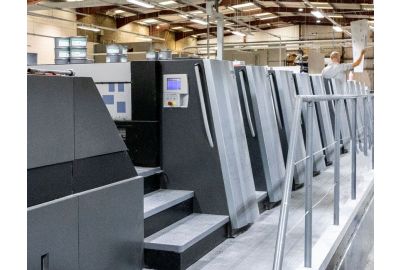
Some buyers are adamant they don't want a digitally produced book, and that assumption isn't right. They're partly correct - nobody wants a toner-based, photocopier-quality book. But modern offset digital printing, using presses like HP Indigo, prints to the same standard as offset litho. There's no perceptible difference between digitally produced books and litho-produced ones. It's a persistent myth in the industry, and one worth challenging if it's holding your decisions back.
Print on Demand vs Short Run vs Bulk Print: What's the Difference?
These are genuinely different options, not just different scales of the same thing.
Print on demand sits in a different market entirely. Books are produced to a fixed format at specialist facilities, quality tends to be inconsistent, and printers typically want a regular, ongoing flow of orders to make it commercially worthwhile.
Short run - typically anywhere from a few dozen to a few hundred copies - is printed digitally at very high quality, indistinguishable from larger litho volumes. Yes, the unit cost is slightly higher, but you get your books quickly and without a big upfront spend. It also gives you flexibility: you can tweak a design, update time-sensitive information, change a price, or run different cover versions for different markets, then simply order more as sales pick up. For small, nimble self-publishing businesses, often run as a side hustle from home, there's also no storage headache. A short run is a couple of boxes, not a warehouse.
Bulk runs, printed on litho presses in the thousands, bring the unit cost down, but they demand a much bigger upfront investment plus the ongoing cost and risk of storage. Books can get damaged over a long storage period, and if you later want to change the cover or sell into a different market, you're stuck with what you've already committed to. Bulk print has its place, but for most self-publishers starting out, a short run is the more forgiving route.
Getting Your Book Print-Ready: Common Mistakes to Avoid
This is where avoidable mistakes cause the most problems. Files need to be supplied as print-ready PDFs, a separate file for the cover and a separate one for the inner pages, ideally with bleed included, though this can be added for you if needed. Files should be exported as CMYK, not RGB, and any images need to be as high-resolution as possible. Anything much below 300 DPI will start to look pixelated in print. Software like Canva and Adobe Express both have proper export settings for print, so use them, and always tick the option to include bleed.
Why Your Book Cover Might Look Different in Print Than on Screen
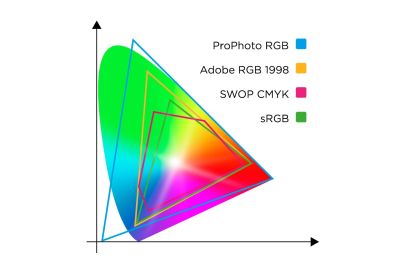
This is one of the most common questions authors ask once their books have been delivered, and it usually comes down to expectation rather than a fault. Most people view their artwork for weeks on a high-resolution, backlit screen, working in RGB, the colour space monitors use, which makes colours pop in a way paper simply can't replicate. Paper isn't backlit, it has its own tone of white, and ink isn't fully opaque the way on-screen colour is. Print also works in CMYK rather than RGB. Converted colours are usually imperceptibly close to their RGB originals, but not always identical. That's why it's best to design and export in CMYK from the outset. If you're especially concerned, ordering a single copy first will give you a very good sense of what the full run will look like.
Don't Over-Spec (or Under-Spec) Your Book
A common misconception among first-time self-publishers is overspecifying the book - choosing finishes and materials the target reader won't pay for. This often happens because the author, being so close to the project, is far more critical than the eventual buyer will be. A high-end photography book at £100 genuinely warrants the finest paper and binding. A children's colouring book doesn't need that, even though it still needs high production standards for its own market. Get this wrong in either direction - overspec it and price yourself out, or underspec it and undersell the finished product - and it comes back to that same early question: who is this book for, and what's it about?
Selling Your Book: What Happens After It's Printed
This is where a printer's role tends to end and the author's begins. Once a book is printed, how it reaches readers is really beyond production expertise; it's not something a production house gets involved in. Authors typically work this out themselves, often already aware of Amazon's reach. Some set up their own websites, while others sell through craft shows and similar events.
Do You Need an ISBN to Self-Publish?
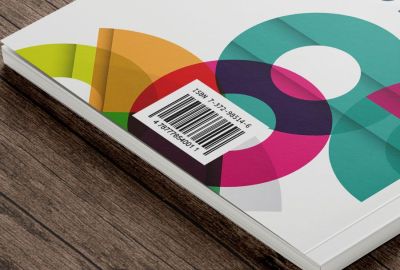
ISBNs sit in a similar space. An ISBN isn't something printers provide, though some selling platforms require one on the book. If your chosen retailer needs one, you'll need to generate it yourself using one of the many free ISBN creation tools available online, then place it within your artwork before it goes to print.
The Bottom Line
Self-publishing rewards authors who get the sequence right: finish the manuscript first, then make informed production choices, the right print method, the right run size, correctly prepared files, matched honestly to your audience and budget. Only then decide how you'll get the finished book in front of readers. Get the middle stage right, and everything either side of it becomes far more straightforward.